
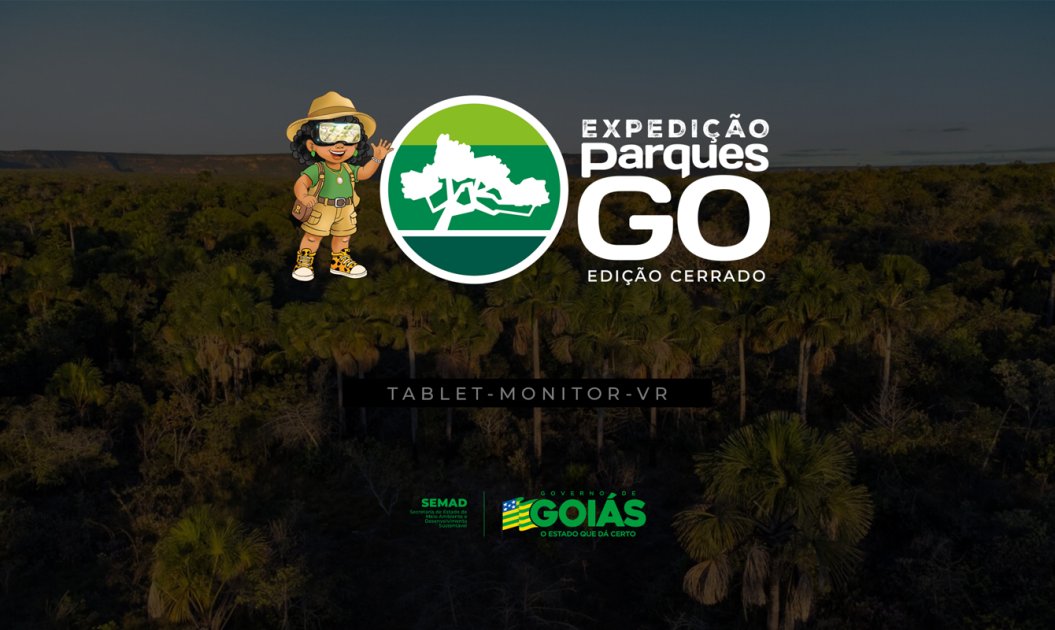
Virtual Reality Project – SEMAD | Goiás Parks
This project reflects my approach and many years of audiovisual experience in transforming complex challenges into intelligent digital solutions, combining design, technology, and strategic vision.
1. Project Overview
The Virtual Reality Project – SEMAD | Goiás Parks was an immersive experience initiative developed for the State Secretariat for Environment and Sustainable Development (SEMAD) of Goiás. The main objective was to democratize access and promote environmental education for the seven state parks of Goiás, using virtual reality as a bridge between the population and the state's rich natural heritage.
2. The Real Problem
Goiás is home to seven state parks of unique biodiversity and great ecological value, but geographical reality imposed significant barriers. Limited physical access due to distance, precarious infrastructure in some regions, and the costs associated with visitation prevented a large part of the population, including students and potential tourists, from experiencing these ecosystems. This limitation resulted in low awareness of the importance of these parks and an underutilization of their educational and tourist potential, creating a bottleneck in promoting environmental education and valuing Goiás' natural heritage.
3. Insight and Strategy
The strategic diagnosis indicated that virtual reality (VR) technology could overcome physical barriers, offering an immersive and high-impact experience without generating any additional environmental footprint. The strategy was to create a sensory and educational journey, accessible to a wide audience, that not only showed the parks but made them feel. We prioritized capturing authentic, high-quality content, creating an engaging narrative, and integrating multi-sensory stimuli. We opted for an architecture that allowed exhibition in a high-traffic environment, with centralized control and device synchronization, ensuring scalability and operational ease. The main trade-off was balancing technical realism with experience accessibility, choosing intuitive VR equipment and a simplified interface for all ages.
4. The Developed Solution
The solution consisted of a fully immersive 360° virtual reality experience, transporting participants on a virtual journey through the seven state parks of Goiás. The solution flow included:
- Content Capture: Six intense days of field recordings, using lean 360° imaging equipment and binaural sound capture to faithfully reproduce the environments.
- Post-production and Editing: Meticulous editing of 360° content, spatial sound design, and 3D creation of mascots (Vida and Maned Wolf) that served as interactive guides.
- Dedicated Application: Development of a local application for managing and simultaneously playing content on multiple VR headsets.
- Multi-sensory Integration: One of the great differentiators was the integration with a central system for emitting scent, wind, water, and heat, which synchronized with the visual and auditory experience, elevating the level of immersion and realism.
This approach transformed virtual visitation into an almost real experience, promoting environmental education and awareness of preservation in a memorable and emotionally impactful way.
5. Technologies Used (with Purpose)
Technology selection was guided by the pursuit of maximum immersion, accessibility, and operational efficiency:
- VR Hardware:
Oculus Quest 3 VR – Chosen for their autonomy, ease of use (wireless), and ability to offer a high-quality experience to a broad audience without the need for complex external hardware. Their portability was crucial for exhibition at events.
- Content Capture:
High-resolution 360° cameras – Used to capture panoramic images of the parks, allowing the user to have a complete and immersive view of the environment. The choice of high resolution ensured visual realism.
Binaural sound recording equipment – Essential for recreating the soundscape in a three-dimensional way, increasing the sense of presence and immersion, making the sound seem to come from specific directions within the virtual environment. - Application Development:
Game engine/development platform (e.g., Unity or Unreal Engine - inferred) – To create the application that orchestrated the playback of 360° video, the integration of 3D mascots, and, crucially, synchronization with sensory effect devices. The choice of a robust engine ensured performance and flexibility for integrations.
- Hardware Integration (Creative Engineering):
Scent, wind, water, and heat emission central system – Custom-developed or adapted to synchronize with specific moments of the virtual narrative. This integration was vital for the multi-sensory differential, transforming the experience from "seeing" to "feeling" the environment.
- 3D Modeling and Animation:
3D modeling software (e.g., Blender, Maya - inferred) – For the creation of the mascots Vida and Maned Wolf, who acted as guides in the experience, adding an element of interaction and personalized narrative.
6. Delivered Results
The project was a resounding success, proving the impact of virtual reality when applied strategically:
- High Public Engagement: During the 30 days of exhibition at Shopping Cerrado, in Goiânia-GO, the experience received over 10,000 visitors, including schools, organized groups, and spontaneous public.
- Institutional Recognition: Attended by Governor Ronaldo Caiado and other authorities, validating the relevance and innovative potential of the initiative.
- Education and Awareness: Achieved high rates of satisfaction and engagement, promoting environmental education and strengthening the perceived value of Goiás' state parks.
- Democratized Access: Overcame geographical and financial barriers, making the parks accessible to an audience that would otherwise not have contact with these natural beauties.
7. Differentiators and Learnings
This project stood out for its holistic approach and courage to go beyond the visual. The biggest differentiator was the integration of multi-sensory stimuli (scent, wind, water, heat) which elevated immersion to a new level, creating a deep emotional connection with nature. I learned about the importance of extremely planned content capture and how a lean, multidisciplinary team can deliver complex solutions with high quality. The project reinforced my repertoire in creative engineering, showing how the combination of hardware, software, and sensory design can solve real communication and education problems on a large scale. It serves as a model for future applications of immersive technologies in the public sector, scaling access to culture and the environment sustainably.