
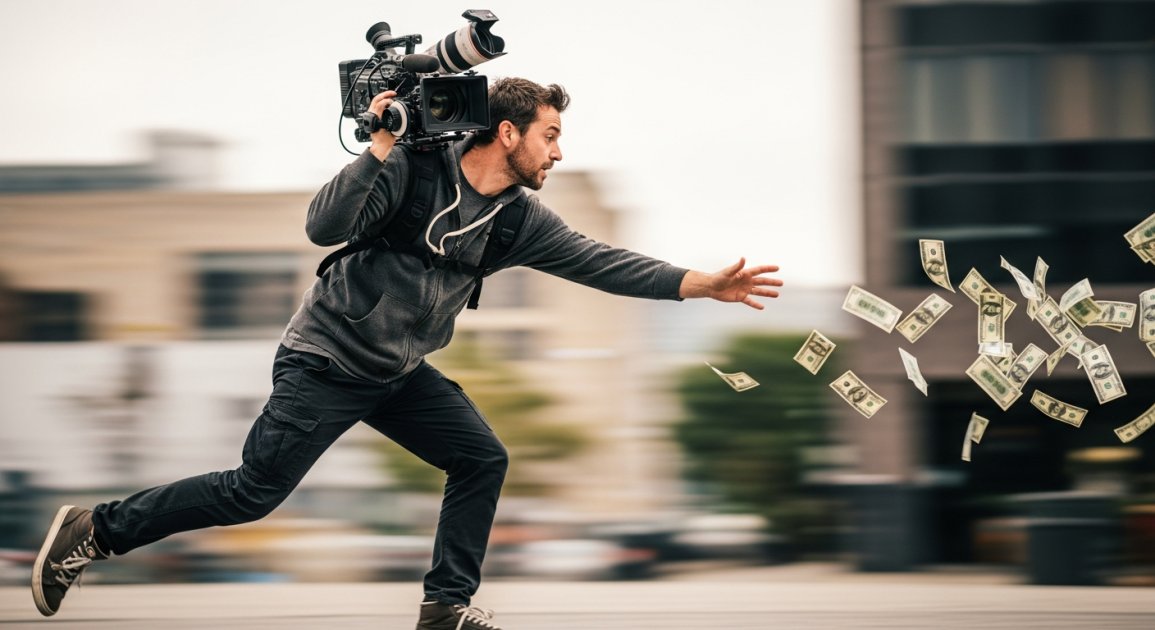
Let's get straight to the point. You have a brilliant idea for a short film, a series, a documentary. The script is pulsating, the characters are alive in your mind. But then reality hits, cold as a cost spreadsheet: locations, equipment, crew, post-production... The dream, which was in 4K, suddenly looks like a pixelated, underfunded GIF. This frustration of seeing creativity hit the budget barrier is the ghost that haunts 9 out of 10 audiovisual creators. It's the "valley of death" where great stories disappear before they even see the light of day.
For years, we got used to the idea that "filmmaking is expensive." That quality requires time and rivers of money. But what if I told you that this rule is being rewritten right now, at this very moment? The transformative insight isn't a single technology, but the convergence of two powerful forces: the explosion of generative Artificial Intelligence and the modernization, albeit timid, of municipal incentive laws, which are beginning to value innovation.
If you think AI in audiovisual is just about creating fun images for social media, you're looking at the bait and ignoring the size of the shark coming right behind it.
The real game-changer is understanding that AI is not a threat, but a copilot. A process accelerator. And funding bodies, like municipal culture departments and agencies such as Spcine in São Paulo or RioFilme in Rio, are starting to realize that projects integrating technology into their pipeline aren't just "trendy." They are more efficient, more viable, and have greater potential for impact. The combination of a creative project with an intelligent execution plan, supercharged by AI, is the formula to unlock these resources.
Deconstructing Production: Where AI Becomes Your Best Tool
Okay, Washington, cool talk, but how does this work in practice? Where do I press the "AI" button for my film to happen? There is no button, there is a mindset. It's about looking at each stage of your process and asking yourself: "How can technology make this faster, cheaper, or better?".
1. Pre-production: From Idea to Battle Plan in Record Time
Pre-production is where projects bleed the most: time and money spent on planning. This is where AI comes in as a creative and logistical steroid.
- Scriptwriting and Brainstorming: Tools like ChatGPT-4 or Claude 3 can act as a virtual writers' room. Ask it to develop character arcs, suggest dialogue in different tones, create synopses, or even structure entire scenes from a premise. It's not about it writing for you, it's about accelerating past the "blank page."
- Concept Art and Storyboards: Remember the months of work for an artist to create the look of your project? With tools like Midjourney or Stable Diffusion, you can generate dozens of options for sets, costumes, and keyframes in a matter of hours. This not only saves a fortune but allows you and your team to visualize the film long before turning on the first camera. In a funding proposal, presenting a robust and visually stunning "look book," created in days, puts you on another level.
2. Production: The Smart Film Set
On set, every minute is expensive. AI is already optimizing processes that were once manual and time-consuming. Think of camera software that uses AI to maintain perfect focus on a moving actor, or drones that plan autonomous and cinematic filming routes. Virtual production, using technologies like Unreal Engine 5, allows for the creation of fantastic worlds inside a studio, eliminating travel and logistics costs. Presenting a budget that swaps an expensive trip for efficient virtual production is music to any evaluation committee's ears.
3. Post-production: The Silent Revolution
This is where the magic really happens and where the impact on the budget is brutal. Post-production is a drain on time and resources, and AI is transforming everything.
- Editing and Logging: Platforms like Descript transcribe all your raw footage and allow you to edit the video simply by editing the text. Tools in Adobe Premiere Pro, like Scene Edit Detection, automatically cut an already edited video into its original clips. This saves days, maybe weeks, of manual labor.
- Visual Effects (VFX) and Color Grading: Tools like RunwayML and Kaiber are democratizing visual effects. Rotoscoping (the process of cutting out a moving object, frame by frame) that took days can now be done in minutes. AI can colorize films, restore low-quality images, and generate complex effects that were once exclusive to Hollywood blockbusters.
- Soundtrack and Sound Design: Need an original soundtrack but don't have the budget for a composer? Platforms like AIVA or Soundraw use AI to compose unique music based on the genre, rhythm, and mood you need. The result is surprisingly professional and free of copyright issues.
The "Innovation Project" That Opens Doors (and Coffers)
Now, let's connect the dots. When you submit your project to a municipal incentive law, like the Paulo Gustavo Law grants operated by municipalities, you are no longer just delivering a script. You are delivering a creative business plan. By including an "Innovation and Efficiency Strategy" annex, you show that you are not just asking for money, you are presenting an intelligent solution to make your art viable.
In this document, you can detail:
- Cost Reduction: "We will use AI tool X for storyboard creation, reducing pre-production costs by 40% and time by 60%."
- Increased Production Value: "By using platform Y for VFX, we will be able to create complex digital sets that would be unfeasible with a traditional budget, raising the project's visual standard."
- Workflow Optimization: "Our post-production pipeline will integrate tool Z for logging and initial editing, allowing our editing team to focus on creative refinement, not repetitive work."
This demonstrates professionalism, management, and a vision for the future. You are no longer just an artist; you are an innovator. And that's what the market and funders are looking for. The consulting firm PwC, in its Global Entertainment & Media Outlook 2023-2027 report, already points to AI as one of the main drivers of efficiency and growth for the entire media and entertainment industry. Aligning with this trend is no longer a differentiator; it's a necessity.
Your Call to Action: Stop Waiting, Start Executing
The barrier to high-quality audiovisual production is crumbling. The excuse of "I don't have money" is losing ground to the excuse of "I'm not curious." The technology is here, accessible, and often cheap or even free to start with.
The question that remains is not if AI will change the audiovisual industry, but when you will start using it to your advantage. Remember the golden rule of this new world: those who don't know how to apply AI in their work will not be replaced by a robot. They will be replaced by a professional who does. Someone who delivers projects faster, with higher quality, and at a lower cost, because they have a silicon copilot working alongside them.
So, what are you going to do today? Will you keep looking at your idea in the drawer or will you open a browser tab and test one of these tools? Start small. Take a scene from your script and generate concept art in Midjourney. Record a short video with your phone and use Descript to edit it. The future doesn't knock on the door and ask for permission. It breaks the door down. And the good news is that, this time, it left the tools for you to build something new in its place.
The time to act is now.