
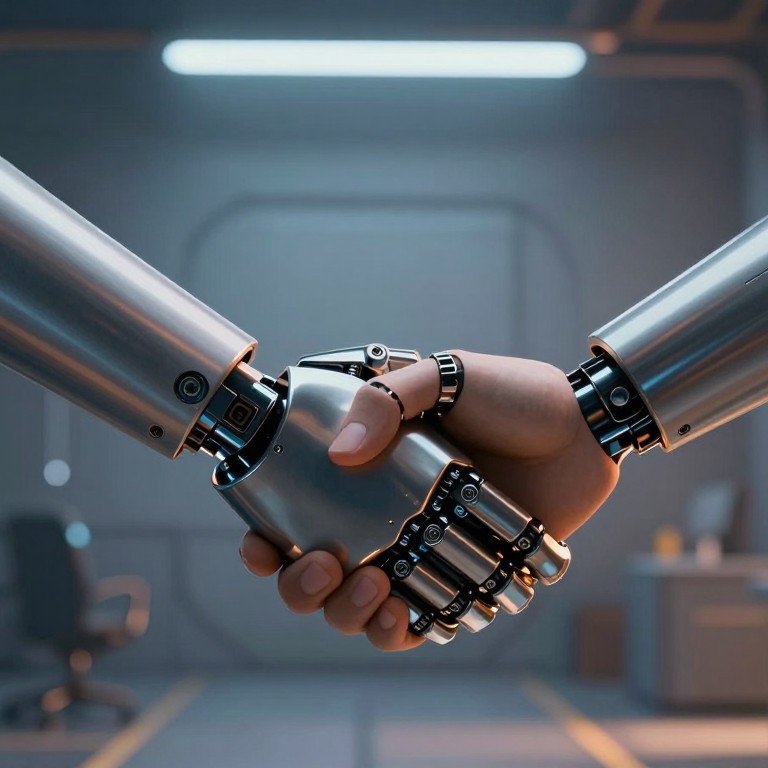
Have you ever stopped to think about what happens when the base of the demographic pyramid begins to collapse? For decades, the world looked at China as the "factory of the world," sustained by an almost infinite supply of cheap labor. But that reality has changed. With a rapidly aging population and a shrinking workforce, Beijing has found an answer that is neither political nor purely economic: it is purely technological. China is becoming the world's greatest robotic power out of necessity, and this is a lesson the global market must learn before it is too late.
The Problem: The Talent Gap is Real
We are not talking about a dystopian prediction for 2050. The shortage of qualified talent is already a bottleneck for productivity. When you cannot find people for operational, administrative, or technical roles, your talent acquisition costs rise, profit margins fall, and your business stagnates. The common mistake is thinking that "hiring more people" will solve the problem. If the supply of people is shrinking, the solution is not to seek more hands; it is to optimize what you already have with intelligence and automation.
Automation as a Strategic Response
China is not automating factories just to cut costs; they are doing it to keep operations alive. As recently reported by CNN regarding China's demographic transition, massive investment in service robotics and advanced manufacturing is the pillar supporting GDP in the face of population decline.
For us, the insight is clear: automation is your insurance policy against irrelevance. Over the next five years, sectors like logistics, retail, and even customer service will undergo a radical transformation. We won't see humanoid robots everywhere, but we will see autonomous robots and integrated AI systems doing the heavy, repetitive, and dangerous work, leaving the layers of decision-making, strategy, and empathy to humans.
AI and Robotic Fleet Management
The great differentiator of the new era is not the hardware—the mechanical arm or the autonomous vehicle—it is the brain that commands it. AI applied to robotic fleet management allows machines to learn from the environment, adjust routes in real-time, and predict failures before they happen. This is industrial-level productivity. If your company still treats technology as an "IT expense" and not as a performance tool, you are missing the boat.
How to Prepare for Human-Machine Collaboration
Here is the point where many professionals feel threatened. Let's be direct: AI will not replace you, but the professional who knows how to use AI will replace the one who doesn't. Human-machine collaboration is the new gold standard.
To prepare, you need to focus on three pillars:
- AI Literacy: Understand how automation tools work. You don't need to be a programmer, but you need to know how to ask the machine for the right thing.
- Process Design: Design is not just aesthetic; it is strategic. How do you design the workflow so that technology solves the bottleneck and the human delivers the added value?
- Adaptability: The ability to learn and unlearn is the most valuable skill of this century.
Final Reflection
The global market will not wait for you to adapt. Labor shortages are a worldwide phenomenon that will hit all sectors. The question you must ask yourself today, when looking at your company or your career, is not "how do I do more?" but rather "how do I automate the basics to focus on the extraordinary?".
If you aren't using technology to accelerate your game today, someone—perhaps a competitor who has already understood the value of automation—is already using it to overtake you. The future is not about robots versus humans; it is about humans empowered by robots. And the time to start this transition is now.