
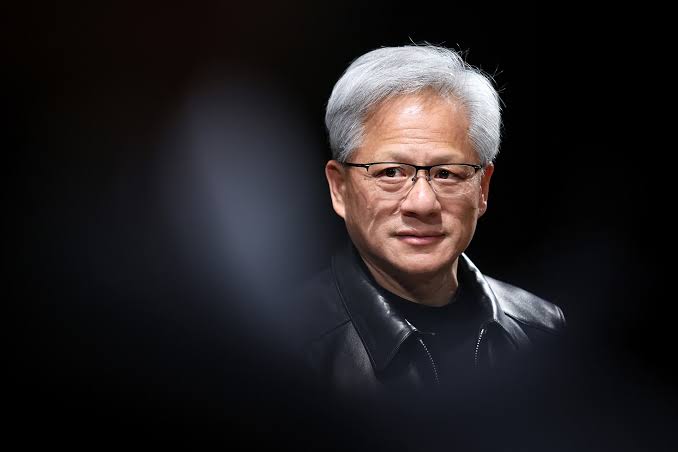
We live in an era where technology is not just a tool, but the foundation of the global economy. At the center of this infrastructure, Nvidia has become the most influential name on the planet, dictating the pace of the AI revolution. However, recent news involving CEO Jensen Huang—from allegations of personal misconduct to complex connections with Chinese competition and DeepSeek—forces us to look beyond the chips and market gains.
When a company reaches Nvidia's level of dominance, it ceases to be just a hardware manufacturer and becomes a geopolitical entity. The real problem here is not just individual behavior, but the fragility of a system that concentrates so much power in a single leader. Trust, the most expensive currency in the tech market, is being tested at a time when transparency should be the absolute priority to keep innovation on ethical tracks.
Concentrated Power and the Shadow of Decisions
History shows that when success is exponential, scrutiny must be proportional. Reports of undisclosed relationships and conflicts of interest reveal a systemic failure in corporate governance. When a leader becomes the brand itself, any shadow over their personal conduct instantly reverberates in stock value and global supply chain stability.
This is not just executive gossip, but a matter of serious strategic implications. If allegations that companies linked to Alice Huang invested in DeepSeek and secured privileged Nvidia chip supplies are confirmed, we face a conflict of interest that alters the competitive balance of the AI market. This is not just a personal lapse in judgment; it is an operational risk for every investor and partner relying on the neutrality of the semiconductor giant.
Geopolitics, Chips, and the Silent War
The connection between central Nvidia figures and Huawei, the major Chinese rival, adds a layer of complexity far beyond corporate ethics. We are living in a true "Technological Cold War," where hardware is the ammunition. The idea that the flow of cutting-edge technology might be influenced by personal or parallel interests challenges export policies and national security.
For those in the tech sector, this is a cruel reminder that innovation does not occur in a vacuum. It is shaped by regulations, alliances, and, above all, the integrity of those who control the taps of knowledge. If you believe your company's strategy is immune to global geopolitical shifts, you are operating with a myopic view. The AI market is a chessboard where, if the king stumbles, the entire game structure can be invalidated.
The Lesson for the Future Professional
What does this mean for you, trying to scale your productivity or business using AI? It means that tool reliability is as important as technical capability. It is not enough to master prompts or neural network architecture; you must understand the provenance of the technology you use. Those who cannot evaluate the resilience and ethics of the platforms supporting their work risk building their careers on foundations that can crumble at any sign of corporate instability.
"True innovation is sustainable only when anchored in unquestionable governance. Without integrity, the power of technology becomes a liability, not an asset."
Technology is an amplifier. It amplifies our ability to create, but also our human errors. The Nvidia case is a case study on how arrogance and isolation in decision-making can compromise years of technical leadership. As professionals, our role is not just to consume what the market delivers, but to demand transparency and diversification of sources.
Reflection and Action
Do not be seduced only by the shine of numbers and the speed of processors. Real innovation requires a critical look at who is in charge and what interests lie behind the curtain. If you want to remain relevant this decade, start auditing your technological dependencies:
- Diversify your tools: Do not place your entire AI strategy in a single vendor or ecosystem.
- Monitor governance: Pay attention to the market practices of the companies you use as pillars of your business.
- Prioritize ethics: In a world of generative AIs, your reputation and data integrity are the only things that cannot be replicated or replaced.
The digital future is not about who has the fastest chip, but who has the clearest vision and the most solid conduct. Technology will continue to advance, but ethical leadership is what differentiates those who create a legacy from those who merely occupy space in history. What are you doing to ensure your work does not depend on a house of cards?